domingo, 20 de marzo de 2016

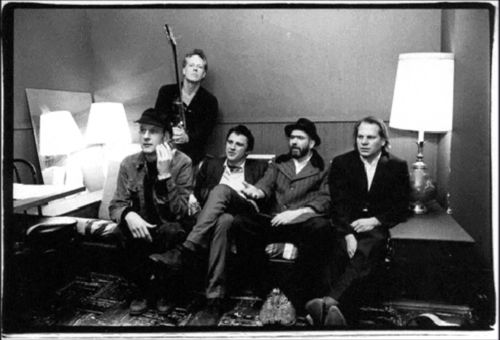
The Church


One of the most successful and enduring Australian bands of the post-punk era, The Church began their career with music that paid explicit homage to psychedelia and 1960s folk rock, and with the passage of time they refined their own unique sound, fusing pop, art rock, progressive rock, and other flavors. The Church were formed in Sydney, Australia in 1980 by Steve Kilbey (bass, vocals), Peter Koppes (guitar), and Nick Ward (drums). Kilbey, a former member of The Tactics, had previously played with Koppes in a glam rock band called Precious Little in the mid-'70s, but both were eager to do something different when they teamed up with Ward. Originally calling themselves Limosine, the new group solidified their approach while recording demos in Kilbey's home studio, and when guitarist Marty Willson-Piper joined the lineup, their signature style began to fall into place. Adopting the name The Church, the group began earning a reputation on Sydney's club circuit, and by the end of 1980 they had scored a record deal with EMI's re-activated Parlophone label. The debut album from The Church, 1981's 'Of Skins and Heart', became a commercial success in Australia after the single "The Unguarded Moment" hit the pop charts. Around the time of the album's release, the band parted ways with drummer Ward, and Richard Ploog became their new percussionist. The Church promptly went into the studio with Ploog to cut an EP, 'Too Fast for You', and material from the EP and 'Of Skins and Heart' was compiled into an album simply called 'The Church' that was released in the U.K. and the United States. 


In the spring of 1982, The Church issued their second full-length album, 'The Blurred Crusade', which was a success at home and fared well in England, but Capitol Records, their label in the United States, was not impressed with its lush, neo-psychedelic sound, and they opted to drop the band rather than release it stateside. The Church's more atmospheric and innovative side continued to take the forefront on their third album, 1983's 'Séance', which rose to number 18 on the Australian charts, but was little heard elsewhere. In 1984, The Church released a pair of EPs, 'Persia' and 'Remote Luxury', and the two short-form releases were compiled into an album entitled 'Remote Luxury', which landed the group a new U.S. record deal with Warner Bros. After a long run of international touring in support of the records (including an only moderately successful trip to the United States), The Church took a brief sabbatical before returning to the studio to record 1986's 'Heyday', which became a major Australian hit, and helped solidify the band's international audience after earning enthusiastic reviews in the United States and Great Britain. That same year, Steve Kilbey began work on his first solo effort, 'Unearthed', which was released in 1987, and Marty Willson-Piper and Peter Koppes quickly followed suit with solo sets of their own; all three would pursue solo careers during downtime from the group. 

In 1988, The Church reconvened with new business partners -Arista Records in the United States, and Mushroom Records in Australia- and a new album, 'Starfish', which was recorded in Los Angeles with producers Waddy Wachtel and Greg Ladanyi, both longtime veterans of the L.A. studio scene. The album was a solid international success and featured the hit single "Under the Milky Way," but the experience was bittersweet; the members of the group didn't enjoy working in Los Angeles and often argued with Wachtel, and the album's success prompted Arista to urge The Church to re-team with Wachtel for the follow-up, 1990's 'Gold Afternoon Fix', though the band had hoped to work with former Led Zeppelin bassist John Paul Jones. 'Gold Afternoon Fix' didn't match the commercial success of 'Starfish', and for 1992's 'Priest = Aura', the band produced themselves; they also worked with a new drummer, former Patti Smith Group timekeeper Jay Dee Daugherty, after Ploog left the group. The album became a favorite with fans, but its long, ambitiously structured tracks didn't connect with listeners who discovered The Church via "Under the Milky Way," and Koppes opted to leave the group, as did Jay Dee Daugherty. 1994's 'Sometime Anywhere' found Kilbey and Willson-Piper joined by producer and drummer Tim Powles and a handful of session musicians; the album was adventurous and musically satisfying, and Kilbey and Willson-Piper staged an acoustic tour in support, but it was a commercial disappointment, and 'Sometime Anywhere' would prove to be The Church's final major-label album in the United States. 


The Church partnered with the independent White Records label for their next album, 1996's 'Magician Among the Spirits'; the album fared poorly in America after its distributor abruptly went bankrupt, but it was a solid set that was embraced by fans, and featured a guest appearance by Peter Koppes, who also appeared on their subsequent concert tour. Koppes then joined Kilbey and Powles in the studio for sessions that produced the album 'Pharmakoi/Distance-Crunching Honchos with Echo Unit', released in 1997 under the group name The Refo:mation; Koppes rejoined The Church in time to work on the 1998 album 'Hologram of Baal', and took part in a subsequent international tour. (The initial release of 'Hologram of Baal' included a bonus album, 'Bastard Universe', a 79-minute collection of improvised material from the quartet.) 'Hologram of Baal' was followed by 1999's 'A Box of Birds', a collection of covers in which the band interpreted the likes of The Beatles, Neil Young, Hawkwind, Television, Iggy Pop, and The Monkees

For the next three years, the members of The Church busied themselves with other projects, but the first decade of the new millennium would prove to be a prolific time for them: beginning with 2002's 'After Everything Now This', The Church released nine full-length albums between 2002 and 2009, including a set of songs created with science fiction author Jeff VanderMeer to accompany his novel "Shriek", and a set of acoustic reinventions from The Church's back catalog. In 2011, The Church set out on an ambitious U.S. tour in which they performed three of their albums in full on-stage -'Starfish', 'Priest = Aura', and 2009's 'Untitled #23'- before sold-out crowds in nine cities. 'Untitled #23' was released in the United States by the independent Second Motion Records label. In 2014, the band issued its 21st studio long-player, 'Further/Deeper', which featured former Powderfinger guitar player Ian Haug taking over for Wilson-Piper, who had relocated to Sweden to pursue other projects. [SOURCE: ALLMUSIC

sábado, 19 de marzo de 2016

Heidi Berry


Heidi Berry cut a stark contrast to the prevailing musical mentality of the early '90s -despite releasing records on both Creation and 4AD, together the leading lights of the shoegazing and dream pop movements, her haunting, luminous folk-inspired sound instead harked back to the work of Sandy Denny and Nick Drake, complete with an earnestness and raw honesty far removed from her irony drenched times. Berry was born in 1958 and raised in Boston, MA, the child of an American actor father and a French-Canadian jazz-singing mother. In 1973, her mother remarried and the family relocated to London, where Berry began writing songs in the mold of heroines like Marianne Faithfull and Chrissie Hynde; in 1985, while studying painting and printmaking at Middlesex Polytechnic, she recorded a private demo tape that then-boyfriend Pete Astor (later of The Loft, Weather Prophets, and Wisdom of Harry fame) suggested she shop around. Berry declined the offer, but a copy of the tape still made its way to Creation honcho Alan McGee, who tracked her down and offered a record deal. She accepted, and issued her six-song debut 'Firefly' in 1987; owing far more to Linda Thompson than Creation labelmates like The Jesus & Mary Chain, it was followed two years later by 'Below the Waves', a stark, poignant effort highlighted by the fan favorite "North Shore Train." Berry's relationship with Creation grew strained, however, and while opening for Felt and Lush, she was spotted by 4AD founder Ivo Watts-Russell, who asked her to record a cover of Emmylou Harris' "'Til I Gain Control Again" for 1991's 'Blood', the third LP by his rotating musical collective This Mortal Coil. Berry signed to 4AD to release her next solo effort, 1991's 'Love', recorded with producer Pete Walsh and an ace backing group including Levitation guitarist Terry Bickers and bassist Laurence O'Keefe, in addition to avant-garde saxophonist Lol Coxhill. Her self-titled masterpiece followed in 1993, notching a minor hit with the lovely "The Sun and the Moon" and yielding an American tour alongside fellow 4AD act Red House Painters. However, despite continued critical acclaim, 1995's 'Miracle' failed to make waves behind Berry's cult audience and she was released from her contract. With the exception of the 1999 single "Needle's Eye" -recorded with former Kitchens of Distinction frontman Patrick Fitzgerald under the name Lost Girls- she remained silent in the years to follow. The compilation 'Pomegranate' appeared on 4AD in 2000. [SOURCE: ALLMUSIC

viernes, 18 de marzo de 2016

American Music Club


Although chosen for its deliberately nondescript qualities, in retrospect the name American Music Club was the perfect moniker for the lauded San Francisco-based band led by singer/songwriter Mark Eitzel: over the course of nine acclaimed albums, the group tied together the disparate strands of the American musical fabric -rock, folk, country, punk, even lounge schmaltz- into a remarkably distinct and riveting whole, creating a brilliant and cohesive body of work dappled by moments of haunting beauty and impenetrable darkness. 

Although born in California, Eitzel spent his formative years in Great Britain and Ohio before returning to the Bay Area in 1980 with the punk band The Naked Skinnies. After the band's breakup, he founded American Music Club in 1983 with guitarist Vudi (born Mark Pankler), bassist Dan Pearson, keyboardist Brad Johnson, and drummer Matt Norelli. Despite the skill and diversity of the other members, Eitzel quickly became the group's focal point: an evocative vocalist and gutter poet capable of composing songs of disquieting honesty and intensity, he was also frequently the band's worst enemy -a heavy drinker since the age of 16, AMC shows often disintegrated into surreal backdrops for Eitzel's alcoholic rants and self-destructive showmanship, and throughout the group's tumultuous career, his erratic behavior led him to briefly exit their ranks on numerous occasions.
Still, Eitzel quelled his demons long enough for AMC to record their 1985 debut, 'The Restless Stranger'; later disowned by the group, the album does offer a rough outline of their increasingly eclectic sound, and firmly established Eitzel's world view, a harrowing vision of life as seen through the bottom of a shot glass. 1987's 'Engine' honed the formula: the addition of producer Tom Mallon as a full-time member expanded the group's sonic palette, while Eitzel's songs achieved new levels of intimacy as compositions like "Outside This Bar" and "Gary's Song" grappled with the realities of the drinking life. 

While American Music Club languished in obscurity in their native country, they earned a solid European cult following on the strength of 1988's 'California', a frequently brilliant collection highlighted by the shimmering country and folk accouterments which couched fractured love songs like "Firefly" and "Western Sky"; "Blue and Grey Shirt," Eitzel's most heartfelt and powerful composition to date, was the first in a series of devastating chronicles of friends lost to the AIDS epidemic. Still, the album garnered little notice, and their next LP, 1989's 'United Kingdom', appeared only in the nation which lent the record its name: another superb collection drawing on leftover material and live tracks, it featured "The Hula Maiden," the first recorded fruits of Eitzel's growing fascination with lounge crooning. 


After a solo acoustic Eitzel release, 1991's 'Songs of Love', American Music Club emerged with its masterpiece, 'Everclear', a remarkable song cycle released to phenomenal critical acclaim (and the usual negligible commercial interest). Still, the lavish praise heaped on 'Everclear' (named in honor of a vicious, 180-proof transparent liquor) finally made the major labels take notice, and a bidding war ensued. After months of negotiations, AMC -now consisting of Eitzel, Vudi, Pearson, multi-instrumentalist Bruce Kaphan, and drummer Tim Mooney- signed with Reprise in the U.S. and Virgin throughout the rest of the world, and entered the studio with acclaimed producer Mitchell Froom. 

The result, 1993's 'Mercury', was a typically iconoclastic effort featuring unwieldy song titles like "What Godzilla Said to God When His Name Wasn't Found in the Book of Life" and "The Hopes and Dreams of Heaven's 10,000 Whores" resting uneasily against lush, obtuse gems like "If I Had a Hammer," "Apology for an Accident," and "Johnny Mathis' Feet." Despite glowing reviews, 'Mercury' fared poorly on the charts, and earned virtually no recognition from radio or MTV. In 1994, AMC issued 'San Francisco', an erratic collection which precariously balanced stark, moving confessions like "Fearless" and "The Thorn in My Side Is Gone" alongside slick pop constructs such as "Wish the World Away" and "Can You Help Me." When 'San Francisco' failed to connect, American Music Club finally dissolved; in 1996, Eitzel issued his proper solo debut, '60 Watt Silver Lining', a collection of torch songs. At the end of the year, he and producer Peter Buck of R.E.M. returned to the studio to record 1997's West. In 2003, Eitzel and Vudi announced that American Music Club were reuniting, and following short tours of Europe and the United States, the group's new album, 'Love Songs for Patriots', was released in the fall of 2004, with more live shows scheduled in support. The group then relocated to Los Angeles, although Pearson and Mooney opted to stay behind in San Francisco. L.A. locals Sean Hoffman (bass) and Steve Didelo (drums) were enlisted to replace the two departing members, and the revised lineup set to work on 'The Golden Age', which was released in February 2008. [SOURCE: ALLMUSIC

miércoles, 16 de marzo de 2016

Wire


Wire emerged out of the British punk explosion but, from the outset, maintained a distance from that scene and resisted easy categorization. While punk rapidly became a caricature of itself, Wire's musical identity -focused on experimentation and process- was constantly metamorphosing. Their first three albums alone attest to a startling evolution as the band repeatedly reinvented itself between 1977 and 1979. That capacity for self-reinvention, coupled with a willingness to stop recording indefinitely when ideas weren't forthcoming, has been crucial to Wire's longevity and continued relevance. 

By the time of punk, British art schools had long been a hotbed of musical activity, spawning some of the nation's most innovative rock acts from the '60s onward. Like many punk contemporaries, Wire had roots in the art school tradition. At Watford Art College in 1976, guitarists Colin Newman and George Gill formed Overload with audiovisual technician Bruce Gilbert (also on guitar). Subsequently, the three recruited bassist Graham Lewis and drummer Robert Gotobed (aka Robert Grey), and the first Wire lineup was in place. 

Wire began playing dates in London and, having ousted Gill, started from scratch, writing new material and taking a more pared-down, experimental approach. A gig at the Roxy in early 1977 proved auspicious. Wire met EMI's Mike Thorne, who was recording groups for a live punk album, "The Roxy, London WC2". Thorne included two Wire tracks and was then instrumental in bringing the band to EMI in September. By then, with Newman writing most of the music, they were eager to record before they lost interest in material, abandoned it, and moved on; a pattern that would define the group. 


Produced by Thorne, 1977's amphetamine-paced 'Pink Flag' found Wire taking punk to extremes while also keeping an ironic distance from it by introducing elements of tension and abstraction. 'Pink Flag''s 21 highly original tracks (each averaging just over a minute and a half) compressed and twisted rock into often jagged, taut shapes. The album met with critical acclaim and a follow-up was recorded in spring 1978. 

'Chairs Missing' was a radical departure. Although the phrase "early Pink Floyd" was uttered dismissively in some quarters, it was well-received. With Thorne playing keyboards and producing, this was a more complex, multi-dimensional record that supplemented 'Pink Flag''s harsh minimalism with dense, occasionally unsettling atmospherics. Wire albums usually feature one near-perfect pop song and 'Chairs Missing''s "Outdoor Miner" almost became a hit, until it was scuppered by a payola scandal at EMI. 

This was an enormously creative phase. Songs were being written and jettisoned at a considerable rate and the band was gigging relentlessly. In summer 1978, Wire played in the U.S. for the first time and, in March 1979, toured Europe with Roxy Music. Although 'Chairs Missing' had been released only months before, live sets included a significant amount of material that would appear on '154'. Indeed, Wire often tended to bewilder live audiences by playing new, unrecorded tracks rather than the numbers people expected to hear. 


If 'Chairs Missing' saw Wire exploring the possibilities offered by the recording studio, on '154' they took fuller advantage of that environment. With Lewis emerging as a vocalist alongside Newman, the result was an expansive, textured album with a more pronounced melodic orientation. '154' was Wire's most accomplished statement to date and the group seemed poised for success. The opposite happened. Wire's relationship with EMI unraveled and they were soon label-less. In February 1980 at London's Electric Ballroom, the band played an infamously chaotic show (captured on 'Document and Eyewitness') that was more like performance art than a rock performance. A five-year hiatus ensued. 

Following a period of intense activity away from Wire, the members regrouped in 1985, referring to their new incarnation as a "beat combo" -a no-nonsense, stripped-down unit. The 1986 "comeback" EP, 'Snakedrill', begat "Drill," a track built on a paradigmatic Wire rhythm, which bridged the gap between the group's past and its present. "Drill" would stand as an evolving metaphor for the band's shifting identity. It mutated through multiple versions, changing from performance to performance. (In 1991, Wire would release 'The Drill', an album composed entirely of versions of the track.) 

The bandmembers' solo endeavors during the early '80s proved crucial to Wire's new direction: the avant pop sensibility developed by Newman on his albums and the experimental inclinations of Lewis and Gilbert were channeled into the nascent digital context in which the band was now working. 'The Ideal Copy' (1987), the first full-length example of Wire's new approach to the processes of composition and recording with sequencing technology, found the group's smart, state-of-the-art grooves skirting the dancefloor. While first-generation fans were glad to have Wire back, their new sound drew a new audience in the U.S. and an American tour followed. They continued in an electronically oriented direction with the more homogeneous 'A Bell Is a Cup...Until It Is Struck' (1988), whose combination of hypnotic, melodic patterns and impenetrable yet catchy lyrics made for surreal, brainy pop. 

Wire had already made one of rock's more unorthodox live records but they further deconstructed the cliché of the "live album" for 1989's 'It's Beginning to & Back Again'. Performance recordings were stripped down in the studio, sometimes to a drumbeat or a baseline, which was then used as the starting point for rebuilding the track. Wire continued to experiment with ways of letting studio technologies affect their creative process on 'Manscape' (1990), which forayed deeper into computer-based electronics and programming. Drummer Robert Gotobed was less enthusiastic about changing his role in the developing digital version of Wire and left the band just before a 1990 tour. Dropping the "e" from the group's name, Gilbert, Lewis, and Newman carried on as Wir, releasing 'The First Letter'. In 1991, another hiatus began and the three returned to their diverse solo ventures. 


In the '80s, American bands like R.E.M. and Big Black had covered Wire songs. By the mid-'90s, Wire's influence started to manifest itself among a younger generation of Brit-pop artists, most notoriously Elastica, whose appropriation of 'Pink Flag''s "Three Girl Rhumba" resulted in a settlement between the groups' respective music publishing companies. Having briefly resurfaced with Robert Gotobed in 1996 for a performance of "Drill" to celebrate Bruce Gilbert's 50th birthday, Wire remained silent until 1999, when they began rehearsing again. In 2000, the band played live in the U.K. (including an event at London's Royal Festival Hall) and completed a U.S. tour; unpredictable as ever, Wire performed almost exclusively old numbers. 

Although reworkings of older tracks taped during 1999 rehearsals appeared on 'The Third Day' (2000), Wire soon initiated their next phase. Completely new material appeared in the form of 2002's 'Read & Burn 01', the first in a projected series of releases to be developed at Newman's Swim studios. While the fast, loud menace of 'Read & Burn 01' harked back to 'Pink Flag', Wire sounded more like they were stomping all over their roots than nostalgically returning to them. A second 'Read & Burn' was out by the end of the year; 'Send', a full-length containing brand-new songs and 'Read & Burn' material, was released in May of 2003. Three years later, a number of Wire's early albums were re-released; in 2007, the group's seminal 'Pink Flag' album hit shelves once again, as well as a third 'Read & Burn' EP. 'Object 47', an album of new material, was released in 2008 and was the band's first release without Gilbert. 'Red Barked Tree' came in early 2011, tailed by a live recording of songs, primarily from that album, titled 'Black Session: Paris'. Inspired by the energy of those live dates, the band headed back into the studio with former touring guitarist Matt Simms to work on some previously unrecorded songs from 1979 and 1980. The results, 'Change Becomes Us', arrived in early 2013. Wire returned with their first new material since 'Red Barked Tree' in 2015 with a self-titled set that featured elliptical pop with '60s-inspired melodies. [SOURCE: ALLMUSIC

martes, 15 de marzo de 2016

This Mortal Coil


The gothic dream pop collective This Mortal Coil was one of the most representative bands on the 4AD label, not least because they were run by 4AD president and co-founder Ivo Watts-Russell. Whether they played covers (of Watts-Russell's favorite artists) or originals, their material epitomized the haunting, ethereal sound that came to be associated with the label. Lush, swirling arrangements drenched in echo, reverb, and other effects were the project's stock-in-trade, often approaching ambient music. A rotating cast of vocalists and musicians supplied the sounds heard on record, all overseen by Watts-Russell and co-producer John Fryer. A studio entity only, the group started out as something of a 4AD all-star unit, but evolved into a way for Watts-Russell to collaborate with up-and-comers and other artists not signed to his label. Whoever was performing, the music was united by its gentle surges of melancholy and by Watts-Russell's highly influential aesthetic. 

Watts-Russell grew up in England's Northamptonshire area, more than an hour's drive north of London. In lieu of college, he worked in record stores, eventually hooking up with the Beggars Banquet retail chain, which had formed its own label. He and colleague Peter Kent co-founded 4AD in 1980 with financial support from Beggars Banquet, and initially signed post-punk acts like Modern English and The Birthday Party. Kent departed after a few years, and Watts-Russell took the label in a more atmospheric direction, making signature signings in Cocteau Twins and Dead Can Dance. The idea for This Mortal Coil germinated around that time; having been unsuccessful in convincing Modern English to record a covers medley that closed their concerts, Watts-Russell decided to do it himself. Gordon Sharp (of Cindytalk) and Liz Fraser supplied vocals on it and the intended B-side, a lovely cover of Tim Buckley's "Song to the Siren." 


From there the project snowballed, and Watts-Russell eventually assembled enough material for an album. Released in 1984, 'It'll End in Tears' featured musical efforts from 4AD staples like Robin Guthrie and Simon Raymonde (Cocteau Twins), Steven and Martyn Young (Colourbox), Brendan Perry (Dead Can Dance), and Mark Cox (Wolfgang Press), among others, with vocals from Lisa Gerrard, Sharp, Modern English's Robbie Grey, and Howard Devoto (Buzzcocks / Magazine). Watts-Russell and Fryer handled any additional instruments or programmed loops as needed. The track listing featured two songs from Big Star's 'Third/Sister Lovers', plus numbers by Roy Harper and Wire's Colin Newman, in addition to band originals. 'It'll End in Tears' helped crystallize 4AD's emerging signature sound, and helped win a wider audience for their stable of artists. 

Fryer and Watts-Russell put together a follow-up album, 'Filigree & Shadow', which was released in 1986. A sprawling and more varied collection, 'Filigree & Shadow' covered songs by Tim Buckley, Colin Newman, Talking Heads, Pearls Before Swine, Gene Clark, Judy Collins, and Van Morrison in between the original compositions. The Cocteau Twins' Simon Raymonde was still a significant presence, and string player/arranger Martin McCarrick took a bigger role this time around; Steven Young and Mark Cox both returned, and members of Dif Juz were also prominent. Most vocals were by Dominic Appleton (also of Breathless), Deirdre and Louise Rutkowski, and a pre-dance diva Alison Limerick

Much of the same core cast -Watts-Russell, Fryer, McCarrick, Appleton, Limerick, and the Rutkowskis- was on hand for the third and final This Mortal Coil album, the tighter 'Blood', issued in 1991. New guest vocalists included Caroline Crawley of Shelleyan Orphan, Kim Deal and Tanya Donelly of The Breeders, and Heidi Berry. Covers this time out included two by Big Star's Chris Bell, Rain Parade, Spirit, Syd Barrett, and Rodney Crowell, among others. Watts-Russell had announced that he would retire the This Mortal Coil name following 'Blood', and remained true to his word. In 1993, he issued a limited-edition CD box set, '1983-1991', which packaged all three of the group's albums, plus a bonus disc featuring original versions of many of their covers. In 1998, Watts-Russell formed a similar but somewhat sparser project dubbed The Hope Blister. [SOURCE: ALLMUSIC

lunes, 14 de marzo de 2016

Shockabilly


Formed in 1982 by guitarist Eugene Chadbourne, bass player Mark Kramer and drummer David Licht, Shockabilly produced music that sounded like an unholy combination of The Electric Prunes and Karlheinz Stockhausen. They specialized in outrageous cover versions -‘Psychotic Reaction’, ‘19th Nervous Breakdown’, ‘Day Tripper’, ‘Purple Haze’- and also more obscure items by John Lee Hooker, John Fogerty and Syd Barrett. When the song seems to be familiar, it gives the listener a thread on which to hang the power trio-chaos in which they liked to indulge. Chadbourne’s background was in rock, blues, late 60s free jazz and free improvisation -he put it all into Shockabilly with an energy and spleen that gained a response from the more adventurous post-punk audiences. After they folded in 1985 Chadbourne, an inspired songwriter, pursued a solo career while Kramer, as well as playing in B.A.L.L. and Bongwater, set up Shimmy-Disc, one of the great radical rock labels of the 80s and 90s. [SOURCE: ALLMUSIC

domingo, 13 de marzo de 2016

Poison Girls


A British punk unit whose thoughtful explorations of issues of sexuality and gender conflicts presaged the riot grrrl movement of the 1990s, Poison Girls were actually a male backing band formed around a singer and guitar player calling herself Vi Subversa. Released in 1979, the Girls' debut, 'Hex', was produced by Crass drummer Penny Rimbaud, as was the following year's 'Chappaquiddick Bridge'. While the guitar-based music on both records was fairly subtle, Subversa's lyrics were anything but, tackling issues of politics, normalcy, romance, and feminism with fury and intelligence. 

After releasing 'Total Exposure', a stopgap live album recorded in Scotland in mid-1981, Poison Girls returned in 1982 with a newly skilled and sophisticated sound on 'Where's the Pleasure', which found Subversa streamlining her material to focus solely on the subject of sex. By the 1983 EP 'I'm Not a Real Woman', the band had virtually abandoned its punk roots in favor of Celtic folk singing and cabaret-styled pop; 1985's 'Songs of Praise' even found elements of funk creeping into the mix.

In the late '80s, Poison Girls called it quits. A four-CD retrospective, 'Statement: The Complete Recordings 1977-1989', was issued in 1996. [SOURCE: ALLMUSIC

sábado, 12 de marzo de 2016

Mighty Mighty


The British band Mighty Mighty developed a larger following in Japan than they did in their native country. However, the group's Japanese fan base evolved posthumously; the band was actually only active for a few years. Mighty Mighty was formed in Birmingham, England, in 1986 by Hugh Harkin (vocals, harmonica), Mick Geoghegan (guitar), Peter Geoghegan (organ, guitar), Russell Burton (bass), and David Hennessey (drums). They made their debut at the NME/ICA Rock Week concerts and were even included on a C-86 cassette compilation. Mighty Mighty released their first single, "Everybody Knows the Monkey," in 1986. Often compared to Orange Juice, Mighty Mighty only recorded one LP, 1988's 'Sharks', before splitting up. The band's jangly singles and B-sides were collected on 'The Girlie Years', the title referring to the name of the group's own label. Vinyl Japan also released Mighty Mighty's BBC sessions in 2001. The band's popularity in Japan resulted from a keen interest in U.K. guitar pop among indie collectors. [SOURCE: ALLMUSIC

viernes, 11 de marzo de 2016

Love And Rockets


Love and Rockets comprised guitarist/vocalist Daniel Ash, bassist/vocalist David J, and drummer Kevin Haskins, all former members of the pioneering goth band Bauhaus. However, the group didn't sound very similar to its first incarnation. Instead, Love and Rockets emphasized the strains of psychedelia and glam rock that appeared underneath Bauhaus' gloomy drone, adding elements of pop songcraft, folk, and R&B, as well as cryptic, self-important lyrics. For most of the late '80s, the group had a devoted cult following, resulting in a surprise Top Ten hit single, "So Alive," in 1989. During the early '90s, the group's audience steadily declined, although they still retained a number of loyal fans. 

After Bauhaus broke up in 1983, David J recorded a solo album and collaborated with The Jazz Butcher, while Daniel Ash concentrated on a side project, Tones on Tail. Haskins soon joined Tones on Tail, but the group folded in 1984. Haskins and Ash then attempted to reunite Bauhaus. David J agreed to the project, but the band's lead vocalist, Peter Murphy, refused. Instead of pursuing an incomplete Bauhaus reunion, Ash, J, and Haskins formed Love and Rockets, taking their name from the underground comic book created by Jaime and Gilbert Hernandez. 


Love and Rockets released their first album, 'Seventh Dream of Teenage Heaven', in 1985; it received mixed reviews but it began to build their following. 'Express', released the following year, was more successful, charting in both the U.S. and the U.K. On 'Earth Sun Moon' (1987) the band retreated to more atmospheric musical territory, with the notable exception of the alternative/college radio hit "No New Tale to Tell," which helped increase the group's fan base. 'Love and Rockets', released in 1989, broke the band into the mainstream, thanks to the T. Rex-inspired Top Ten single "So Alive." The album was nearly as successful, breaking into the Top 20 and going gold. 

After the success of 'Love and Rockets', the members of the band concentrated on solo projects for nearly a half-decade. Love and Rockets returned to recording in 1994 with 'Hot Trip to Heaven', which failed to make any inroads on the pop or alternative charts. In 1996, they returned again with 'Sweet F.A.', and 'Lift' followed two years later. [SOURCE: ALLMUSIC

miércoles, 9 de marzo de 2016

Hüsker Dü


Hüsker Dü and R.E.M. were the two American post-punk bands of the '80s that changed the direction of rock & roll. R.E.M. became a superstar band; Hüsker Dü never was more than a cult favorite. Nevertheless, their albums between 1981 and 1987 have proven remarkably influential; they provided the sonic blueprint for the roaring punk-pop hybrid that crossed over into the mainstream in the early '90s. Not only did they shape the sound of the music, they shaped the way independent bands made the transition to the major labels; they showed other bands that it was possible to record uncompromising music on a major label without losing any integrity or creative control. From The Replacements to NirvanaPixies to Superchunk, nearly every major and minor band that appeared in the alternative underground in the late '80s and '90s owed a major debt to Hüsker Dü, whether they were aware of it or not. 

The band's two songwriters, guitarist Bob Mould and drummer Grant Hart, both had a knack for writing songs that essentially followed conventional pop structures, complete with memorable melodies, but were still punk songs. Hüsker Dü took The Buzzcocks' pioneering punk-pop and made it harder, both musically and lyrically. Throughout their career, Hüsker Dü never lost their edge, never turned down their amplifiers, never compromised their music. While Hart and bassist Greg Norton were an unfailingly strong rhythm section, Mould would prove to be one of the most influential guitarists of the decade. With his slashing rhythms, distorted strumming, and blazing leads, he set the stage for the alternative guitar heroes of the late '80s and the '90s. 


Hüsker Dü formed in Minneapolis, MN, in 1979. Guitarist/vocalist Bob Mould was studying at Macalester College in St. Paul, MN, and working at a record store, which is where he met drummer/vocalist Grant Hart and bassist Greg Norton. The three musicians had diverse tastes, but all shared a love for hardcore punk rock. Naming themselves Hüsker Dü after a '50s Danish board game (the name means "do you remember"), the trio began rehearsing in Norton's basement. 

In the early '80s, Hüsker Dü developed a strong local following; nearly every local band, from The Replacements to Soul Asylum, sounded like the Hüskers. Both Mould and Hart wrote songs and sang lead. In 1981, they released their first single, "Statues," on the local label Reflex, which was quickly followed by their debut album, 'Land Speed Record', which was released on New Alliance Records. Recorded live, 'Land Speed Record' boasted 17 songs that lasted a full 26 minutes. Later that year, they released an equally fast and hard EP, 'In a Free Land'. 

In 1982, they moved backed to Reflex, where they released 'Everything Falls Apart', their first album recorded in a studio. By this time, Hüsker Dü had begun touring the United States relentlessly, traveling across the country in a van and playing small clubs. Along with Minutemen, R.E.M., Black Flag, Meat Puppets, and The Replacements, Hüsker Dü formed the core of a group of independent rock & roll bands that carved out a reputation for touring ceaselessly and getting their records played through college radio stations; they formed the core of the American rock underground in the mid-'80s. Hüsker Dü concerts were a nonstop barrage; the band rarely spoke to the audience and each song segued directly into the next, without interruption. In addition to touring constantly, Hüsker Dü was recording quickly, turning out the 'Metal Circus' EP in 1983. 

After 'Metal Circus', Hüsker Dü developed musically at a rapid pace, with Mould and Hart coming into their own as songwriters on 1984's 'Zen Arcade', their first album for SST Records and their critical breakthrough. 'Zen Arcade' was a double album -something that was completely unheard of in the underground- that showed the band stretching out musically, writing sharper pop songs as well as lengthy abrasive instrumentals. Critics embraced the record, as did independent rock fans. At the end of 1984, they released "Eight Miles High," a cover of The Byrds song; it was only available as a single. 

Hüsker Dü continued to record and tour at a blindingly fast speed throughout 1984 and 1985. Mould and Hart were beginning to develop an unspoken rivalry as well as a dependency on alcohol and speed. Nevertheless, the group was at its peak in 1985, turning out two albums. The first, 'New Day Rising', was released in the spring and showed the band moving closer to concise pop songwriting while accentuating their fierce sonic barrage. 'Flip Your Wig', released late in 1985, featured their cleanest, most accessible production, without making any concessions to mainstream rock. Both albums received excellent reviews, both in fanzines and some mainstream rock publications. 

Following the release of 'Flip Your Wig', Hüsker Dü became the first of the mid-'80s independent post-punk bands to sign a contract with a major label, as they closed a deal with Warner Bros. 'Candy Apple Grey', the band's first major-label album, appeared in 1986. During that year, tensions between Mould and Hart escalated. Mould began to clean up and Hart continued to sink further into drug and alcohol addiction. Nevertheless, they managed to write and record another double album, 'Warehouse: Songs and Stories'. Although Warner didn't want the band to release another double record, Warehouse was released in the spring of 1987, to uniformly positive reviews. 


Hüsker Dü was preparing to launch a series of concerts to support Warehouse when their manager, David Savoy, committed suicide the night before the start of the tour. Hüsker played the tour anyway -they ran through the new album in order every night, without interruption- but Savoy's suicide helped the inner-band turmoil reach a peak. Hart showed no signs of sobering -he was developing a heroin addiction- while Mould was clean. Following the Warehouse tour, the band played no more concerts for the rest of the year, which caused speculation that the group was breaking up. Those rumors were confirmed during the winter of 1987-1988, when Hart was fired and the band broke up. 

Hart released a solo EP, '2541', on SST later that year, followed by a full-length album called 'Intolerance' a year later. After its release, Hart shook loose his addictions and formed a new band, Nova Mob. Nova Mob released their debut album, 'The Last Days of Pompeii', in 1991; a self-titled second album appeared in 1994. Norton became a chef in Red Wing. Immediately after the breakup of Hüsker Dü, Mould embarked on a solo career. After releasing two solo albums -'Workbook' (1989) and 'Black Sheets of Rain' (1990)- he formed a trio called Sugar in 1992. Between 1992 and 1994, Sugar released two albums: 'Copper Blue' (1992) and 'File Under: Easy Listening' (1994). Mould broke up the band in 1995 and returned to a solo career the following year. [SOURCE: ALLMUSIC]