No doubt influenced by the emergence of gothic punk in the early 80s, the Skeletal Family emerged from Bingley in Yorkshire, towards the end of 1982. Early demos recorded in September and December featured the input of Anne Marie Hurst (lead vocals), Trotwood (b. Roger Nowell; bass), Stan Greenwood (guitar), Steve Crane (drums) and Karl Heinz (synthesizer). After a debut single, ‘Just A Friend’, on the Luggage label in March 1983, the band signed to Yorkshire’s established indie, Red Rhino Records. By this time, Howard Daniels had taken over on drums. ‘The Night’ shared the same influences championed by the band’s ‘goth’ counterparts -The Cramps, Bauhaus and The Birthday Party. ‘Alone She Cries’ in January 1984 featured new drummer Martin Henderson, and was followed by ‘So Sure’ in June, alongside 'Recollect', a 12-inch EP comprising early demos. By the advent of 'Burning Oil' in August, Skeletal Family had attracted a sizeable following, principally through support slots to The Sisters Of Mercy. This ascent continued with ‘Promised Land’ in February 1985, where they were aided by Graham Pleeth on synthesizer, the a-side backed by a cover version of Ben E. King’s ‘Stand By Me’. 'Futile Combat' fared well in the UK independent charts, securing a contract with Chrysalis Records, but singer Hurst had left to join Ghost Dance. Recruiting drummer Kevin Phillips and Katrina on vocals, it was a new, more commercial Skeletal Family that issued ‘Restless’ in March 1986 and ‘Just A Minute’ in August, but neither made significant headway and the band were soon dropped (a fate that Ghost Dance would soon come to share). [SOURCE: ALLMUSIC]
Over the course of a recording career spanning several decades, The Residents remained a riddle of Sphinx-like proportions; cloaking their lives and music in a haze of willful obscurity, the band's members never identified themselves by name, always appearing in public in disguise -usually tuxedos, top hats and giant eyeball masks- and refusing to grant media interviews. Drawing inspiration from the likes of fellow innovators including Harry Partch, Sun Ra, and Captain Beefheart, The Residents channeled the breadth of American music into their idiosyncratic, satiric vision, their mercurial blend of electronics, distortion, avant-jazz, classical symphonies and gratingly nasal vocals reinterpreting everyone from John Philip Sousa to James Brown while simultaneously expanding the boundaries of theatrical performance and multimedia interaction.
It was commonly accepted that the four-member group emigrated to San Francisco, CA, from Shreveport, LA, at some point in the early '70s. According to longtime group spokesman Jay Clem- one member of the so-called Cryptic Corporation, the band's representative body- they received their name when Warner Bros. mailed back their anonymous demo tape, addressed simply "for the attention of residents." Finding no takers for their oddball sounds, The Residents founded their own label, Ralph Records, for the purposes of issuing their 1972 debut "Santa Dog," released in a pressing of 300 copies which were mailed out to luminaries from Frank Zappa to President Richard Nixon. Their debut full-length, 1974's 'Meet the Residents', reportedly sold fewer than 50 copies before the group was threatened with a lawsuit from Capitol Records over its cover, a twisted Dadaesque parody of the art to "Meet the Beatles".
The follow-up, 1974's neo-classical excursion 'Not Available', was recorded with the intention of its music remaining unissued; locked in cold storage upon its completion, only a 1978 contractual obligation resulted in its eventual release. Released in 1976, 'Third Reich 'n' Roll' was the next official offering, a collection of pop oldies covers presented in a controversial jacket portraying Adolf Hitler clutching an enormous carrot. After a 1976 concert in Berkeley, CA which cloaked The Residents behind an opaque screen, wrapped up like mummies -the most famous of only three live performances mounted during their first decade of existence- they issued an abrasive 1977 cover of The Rolling Stones' "Satisfaction," which became an underground hit on both sides of the Atlantic at the peak of the punk movement. As the decade drew to a close, the group released a flurry of recordings, further building upon their growing cult following -among them were 1977's 'Duck Stab/Buster & Glen'; 1979's 'Eskimo' (purportedly a collection of native Arctic chants); and 1980's 'Commercial Album', a compilation of 40 one-minute "pop songs" that aired on San Francisco radio only because The Residents played them during the advertising time they bought.
In 1981 The Residents embarked upon their "Mole Trilogy", a prog rock collection of albums -1981's 'The Mark of the Mole', 1982's 'The Tunes of Two Cities', and 1985's 'The Big Bubble'- recounting an epic battle between a pair of tribes named the Moles and the Chubs; a lavish, multimedia tour, "The Mole Show", followed. In the interim, the group also mounted another ambitious project, the "American Composer" series, although only two of the projected titles -1984's 'George and James' (a reinterpretation of songs by George Gershwin and James Brown) and 1986's 'Stars and Hank Forever' (celebrating John Philip Sousa and Hank Williams)- ever appeared. Instead, in the wake of financial and corporate difficulties which resulted in the creation of a New Ralph label, The Residents issued the one-off 'God in Three Persons' (a talking blues outing), and 1989's 'The King and Eye' (a reinterpretation of Elvis Presley standards).
After losing control of the Ralph label as well as their back catalog, The Residents regained the rights to their music in 1990 and began reissuing long out of print material as well as the new "Freak Show", a meditation on circus sideshows and carnival dementia. Four years later, 'Freak Show' was reissued as a CD-ROM, marking the group's first leap into the new digital interactive technology; 'Have a Bad Day' followed in 1996, and included the soundtrack to the CD-ROM game "Bad Day on the Midway".
In 1997, the band celebrated their silver anniversary with the release of the career-spanning overview 'Our Tired, Our Poor, Our Huddled Masses'. 'Wormwood: Curious Stories from the Bible' followed the next year, with 'Roadworms' (songs from 'Wormwood' as performed in the stage show) being issued in mid-2000. They followed that up with the 'Icky Flix' DVD, an incredibly detailed collection of their videos that featured both old and new soundtracks, 5.1 digital stereo Surround Sound, countless hidden videos, and in-depth histories of each individual track. A subsequent tour incorporated the DVD, while guest singer Molly Harvey joined the band on-stage for some truly creative duets. Several high concept projects followed the 2002 compilation 'Petting Zoo'. The first was 'Demons Dance Alone', a complicated pop album that recalled the catchier material from 'Duck Stab' and 'The Commercial Album'. The live retrospective 'Kettles of Fish on the Outskirts of Town' contained three CDs and a DVD. Despite the release of so much old content, new material wasn't in short supply. Their releases throughout the latter end of the 2000s' first decade included 'Animal Lover' (2005), 'Tweedles!' (2006), 'The River of Crime' (2006), 'The Voice of Midnight' (2007), 'The Bunny Boy' (2008), 'The Ughs!' (2009), 'Ten Little Piggies' (a sneak peak at projects in the pipeline, released in 2009), and 'Coochie Brake' in 2011. Much of it, of course, was highly conceptual. [SOURCE: ALLMUSIC]
Poster Children are a high-energy punk-pop band that formed in 1987 in Champaign, IL. Playing what they call "post wave" music, their three full-length releases illustrate why they have a die-hard cult following: their ability to write hard yet melodic songs and their do-it-yourself philosophy, which includes driving their own tour bus, creating all of their own artwork and T-shirt designs, and having their own record label. A longtime college favorite, Poster Children continue to gain fans with each hyperkinetic release, including 1990's 'Daisychain Reaction', 1993's 'Tool of the Man', 1997's 'RFTM', and 2000's 'DDD'. [SOURCE: ALLMUSIC]
Models were one of the pioneers of post-punk and new wave in Australia. Although the band never achieved the international recognition of compatriots such as INXS and Midnight Oil, they reaped several chart hits in their native land. Models formed in Melbourne, Australia, in 1978. The original lineup consisted of Sean Kelly (vocals, guitar), Pierre Voltaire (bass), Ash Wednesday (synthesizer), and Janis Friedenfelds (drums). Voltaire was eventually replaced by Mark Ferrie; in 1979, Wednesday left the group, and Andrew Duffield became the new keyboardist. By 1980, the band's live gigs produced a buzz in the music industry; Models were subsequently signed to Mushroom Records that year, releasing their debut LP 'Alphabravocharliedeltaechofoxtrotgolf'. In 1981, Models became an opening act for The Police. Their performances led to an international distribution deal with A&M Records. However, the group was unable to sustain a consistent membership. Models lost Friedenfelds in 1981 and replaced him with Buster Stiggs. A year later, Stiggs and Ferrie split, and Graham Scott (drums), John Rowell (guitar), and James Freud (bass) were hired to fill the void. Models started to alter their sound as well, becoming more danceable. Models were rewarded with their first big hit, "Barbados," in 1985; it reached number two on the Australian pop charts. The band's next single, "Out of Mind Out of Sight," skyrocketed to the top; it even landed at number 36 in America. The group recorded one more album, 1986's 'Models' Media', before disbanding in 1988. In 1990, Kelly and Duffield formed the short-lived Absent Friends, followed by The Dukes. [SOURCE: ALLMUSIC]
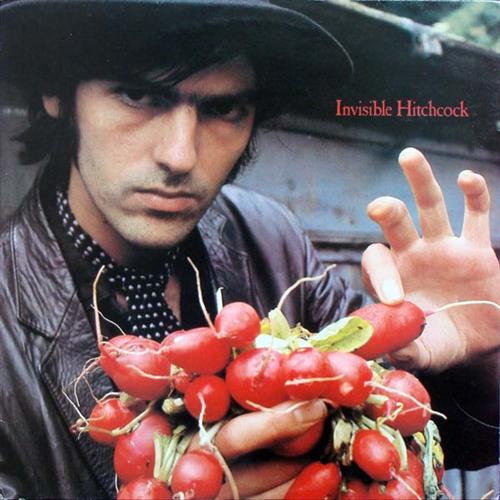
Robyn Hitchcock is one of England's most enduring contemporary singer/songwriters and live performers. Despite having been persistently branded as eccentric or quirky for much of his career, Hitchcock has continued to develop his whimsical repertoire, deepen his surreal catalog, and expand his devoted audience beyond the boundaries of cult stature. He is among alternative rock's father figures and is the closest thing the genre has to a Bob Dylan (not coincidentally his biggest inspiration).
Starting his career as a folkie in Cambridge, England, Hitchcock has been compared to such other British folk-rock figures as Roy Harper and The Incredible String Band, specifically because of his acoustic guitar and loopy vocal style, though his rock voice bears shades of John Lennon and Syd Barrett. Switching gears early to front The Soft Boys, a punk-era band specializing in melodic, chiming jangle pop and clever lyrics ('Underwater Moonlight' remains a classic of the genre), it wasn't long before he quit the band life and made his solo debut. 'Black Snake Diamond Role' (1981) confirmed his reputation as an oddball thanks to his titles "Brenda's Iron Sledge" and "Acid Bird," among others. The psychedelia of 'Groovy Decay' (1982) followed, as did the all-acoustic 'I Often Dream of Trains' (1984). By 1985, Hitchcock's unpredictable songsmithing coalesced on 'Fegmania!' Later that year, the live document "Gotta Let This Hen Out!" demonstrated his command of the stage. In 1988, he landed his first major U.S. label contract with A&M Records and followed the signing by releasing the ambitious 'Globe of Frogs' (1988) and 'Queen Elvis' (1989). He continued to record ('Perspex Island', 1991; 'Respect', 1993) and receive college radio airplay, though once the momentum of the A&M years begun to lag, Hitchcock bounced back in 1996 with the return-to-form 'Moss Elixir' (Warner Bros.), which embraced his folk roots. 'Storefront Hitchcock', the soundtrack to the Jonathan Demme-directed concert film, followed in 1998.
Upon release from his contract with Warner Bros., Hitchcock self-released 'A Star for Bram' (Editions PAF!, 2000), a collection of outtakes and leftover recordings from the 'Jewels for Sophia' (1999) sessions. In 2002 he released 'Robyn Sings', a double-disc collection of Bob Dylan songs culled from various live appearances in America and abroad during 1999-2000. The stripped-down 'Luxor' followed in 2003, released in conjunction with his 50th birthday. In 2004, he took not only a bit role in Jonathan Demme's remake of "The Manchurian Candidate", but released 'Spooked' (Yep Roc Records) a one-off collaboration with alternative country artists Gillian Welch and David Rawlings, recorded over a period of six days in Nashville. A Japanese-only compilation of his work was released in 2005, while 2006 offered 'This Is the BBC', a collection of his BBC sessions from the '90s, as well as 'Olé! Tarantula', a new batch of surreal pop tunes recorded with members of the Minus 5.
In 2007, Hitchcock became the subject of a documentary by director John Edginton ("Robyn Hitchcock: Sex, Food, Death... and Insects") -a behind-the-scenes look at Hitchcock's work with Nick Lowe, John Paul Jones, Peter Buck, Bill Rieflin, Gillian Welch, and other collaborators in TheVenus 3 project. A companion live EP of TheVenus 3's subsequent American tour was released at the same time. In late 2007, Yep Roc began reissuing all of Hitchcock's earlier work, culminating in the boxed collection 'I Wanna Go Backwards'. Hitchcock delved back into the archives for 2008's 'Shadow Cat', a collection of unreleased material from the latter half of the '90s, and also for 'Luminous Groove', a box set of early Egyptians releases and rarities. 'Goodnight Oslo', his second release with The Venus 3, and the live CD/DVD set 'I Often Dream of Trains in New York' arrived in 2009. The following year, Hitchcock dropped 'Propellor Time', a collaboration with The Smiths’ Johnny Marr, Nick Lowe, and John Paul Jones (as well as The Venus 3) that was three years in the making. An all-new solo outing, 'Love from London', arrived on March 4, 2013, a day after his 60th birthday. 'The Man Upstairs', a self-described collection of "new originals, classic covers, and little-known gems" produced by legendary folk producer Joe Boyd, was released in 2014. [SOURCE: ALLMUSIC]
Were his pioneering art punk work as the most experimentally inclined member of WireBruce Gilbert's only claim to fame, he would still be an important figure in the avant-pop world. Gilbert's work outside of that group, however, is at least as intriguing.
Born in 1946, Gilbert was already 30 when Wire formed, a former art school student with a background in the British avant-garde music underground of the late '60s. This atypical interest is an enormous part of what made Wire so unlike the other bands of the first wave of U.K. punk, as the esoteric leanings of guitarist Gilbert and bassist Graham Lewis meshed with the somewhat more straightforward style of singer Colin Newman and drummer Robert Gotobed. Over their brilliant first three albums, Wire expanded the sonic boundaries of not just punk, but rock music in general.
Wire's final release in their initial incarnation was "Crazy About Love," a 15-minute drone that pointed the way toward Gilbert's next projects. Partnering with Lewis in the duo Dome, Gilbert released several increasingly experimental albums between 1981 and Wire's reformation in 1986. The partnership's pinnacle was 1982's 'MZUI/Waterloo Gallery', a combination of ambient music and found sound that's among the most unusual and absorbing records of Gilbert's career.
During Wire's second incarnation (1986-1991), Gilbert actively pursued a solo career; as this edition of Wire moved more and more into a skewed but subversively commercial pop direction, scoring college and alternative radio hits like "Kidney Bingos" along the way, Gilbert's solo records completely dropped all pretense of pop music. 1984's 'This Way' contains Gilbert's first score for the avant-garde Michael Clark Dance Company and a pair of lengthy minimalist electronic pieces akin to Steve Reich's early-'70s work. 1986's 'The Shivering Man' has more of an odds and ends feel, collecting several of Gilbert's commissioned works from the era. (A CD compilation of tracks from the two U.K.-only albums, 'This Way to the Shivering Man', was released by Wire's U.S. label Restless-Enigma shortly before that company's demise in 1990.) 1991's 'Insiding' is the best release of this period in Gilbert's career; its two lengthy pieces, ballet scores commissioned by dancer Ashley Page, unfold and develop intriguingly over their allotted 20 minutes each. The EP-length 'Music for Fruit' was released later that year. Gilbert also helped Lewis on his own post-Dome solo project, He Said, during this period.
After 1991's 'The First Letter', which was released by Newman, Lewis and Gilbert after the departure of Gotobed, Gilbert followed his almost entirely electronic muse onto the dance floor. By the mid-'90s, he was a fixture in London's techno clubs, DJing and remixing under the name DJ Beekeeper, most often performing inside a garden shed above the dancefloor for a touch of Wire-like visual humor. At the same time, Gilbert also released 1996's 'Ab Ovo'; that year, Wire reunited for a special performance of "Drill" commemorating Gilbert's 50th birthday. He continued to work with Lewis, releasing the collection 'Yclept' in 1999 and collaborating on "Alarm to the Audible Light", a sound installation at the Museum of Modern Art, Oxford in January 2000. Gilbert teamed up with Panasonic as IBM for an early 2001 show. During this time, Wire were preparing their next phase, which culminated with the release of 2002's furious 'Read & Burn 01', but Gilbert also remained busy with other projects such as his soundtrack for the film "London Orbital" (Gilbert and Wire performed at the film's premiere in October 2002). He remained with Wire until 2004, departing after the release of that year's 'Send'. That year, he also released 'Ordier', which was compiled from a 1996 live performance. After spending a few years contributing to multimedia projects like 2006's Soundtrack for an Exhibition for the Musée d'art contemporain de Lyon, Gilbert returned with the album 'Oblivio Agitatum' in 2009. He remained as prolific as ever in the 2010s; in 2011 alone, he reunited with Pan Sonic's Mika Vainio for a commissioned live performance for the Netaudio London festival in May; issued the single 'Monad' on Touch in August; and had the short story "Sliding off the World" (originally a 2006 spoken-word piece) published in the anthology "Murmurations" that October. His album 'Diluvial', a "seven-piece reflection on climate change and creation stories" that also featured multimedia artists Naomi Siderfin and David Crawforth, began as installation piece before Touch released it in 2013. [SOURCE: ALLMUSIC]
Neo-psychedelic pop band 14 Iced Bears was formed in South London in mid-1985 by singer/guitarist Rob Sekula, bassist Alan White and drummer Nick Emery. Soon after relocating to the Brighton area, White exited the group, with bassist Dominic Minques and rhythm guitarist Kevin Canham signing on to record their 1986 Frank label debut single "Inside." Roster changes continued to plague 14 Iced Bears over the course of a series of singles including 1987's "Balloon Song" and the following year's "Come Get Me" (the latter an early release on the famed Sarah label), but upon signing to Thunderball to record their self-titled 1988 debut LP, the line-up finally stabilized, with Sekula and Canham joined by bassist Will Taylor and drummer Graham Durrant. The album was a cult favorite both at home and abroad, leading to a brief flirtation with major label Geffen, but nevertheless 14 Iced Bears' next single, 1989's "Mother Sleep," again appeared on Thunderball; the company collapsed in the wake of the following year's "World I Love," however, and the group landed with the Borderline imprint for 1991's 'Wonder' before disbanding. [SOURCE: ALLMUSIC]
Dislocation Dance can be seen as the unsung forebears of mid-'80s jazz-inflected acts such as Swing Out Sister and Matt Bianco; their influence can also be heard on Stereolab. Formed in the early '80s by Andy Diagram (trumpet, vocals), Ian Runacres (guitar, keyboards, vocals), Paul Emmerson (bass), and Richard Harrison (drums), Dislocation Dance stitched together a patchwork of minimalist new wave, '60s French pop, and jazz. The group's unassuming sound was warmly embraced by the indie crowd in the U.K., and they even appeared on Top of the Pops. In 1981, Dislocation Dance released their debut album, 'Music Music Music'; in addition, they performed live for pioneering British DJ John Peel.
When vocalist Kathryn Way joined Dislocation Dance, the band almost sounded like a distaff version of Liverpool's The Pale Fountains, a group Diagram was also a member of. After recording their second LP, 1984's 'Midnight Shift', Dislocation Dance disintegrated. Diagram eventually joined James; he also formed the Spaceheads. In 1999, Vinyl Japan released Dislocation Dance's BBC Sessions from 1981-1982. A year later, the label reissued 'Midnight Shift' on CD with B-sides, remixes, and a cover of The Beatles' "We Can Work It Out." 'Music Music Music' was also finally released on CD. [SOURCE: ALLMUSIC]
An unfortunately short-lived but utterly wonderful neo-psychedelic jangle pop band, Close Lobsters only managed two albums and an EP in their brief career, but all three releases are brilliant, some of the best music of the late-'80s U.K. indie scene.
Close Lobsters were formed in the Scottish village of Paisley (prophetically enough, given the band's psychedelic tendencies) in 1985 by singer Andrew Burnett and drummer Stewart McFayden. The pair couldn't decide between the names The Close and The Lobsters and simply combined the two for their nonsensical but evocative handle. Adding guitarists Tom Donnelly and Graeme Wilmington, plus Burnett's brother Robert on bass, Close Lobsters gained some early notoriety when their song "Fire Station Towers" showed up on the legendary New Musical Express cassette "C-86", which lent its name to an entire movement of post-punk guitar bands. Close Lobsters had a greater commitment to melody than most of the C-86 bands, though, as shown on their first single, "Going to Heaven to See If It Rains," which was released in November 1986. A second single, "Never Seen Before," appeared in April 1987, with a superior re-recorded version of "Fire Station Towers" and a cover of The Only Ones' "Wide Waterways" on the flip.
The quintet's first album, 'Foxheads Stalk This Land', was released in late 1987 to lukewarm response in a U.K. press already tired of the C-86 propaganda, but its inviting mix of jangle pop, hazy psychedelia, inscrutable lyrics, and monster guitar hooks gained Close Lobsters a small but fervent following on the U.S. college radio scene. A follow-up single, "Let's Make Some Plans," came out in early 1988; this new song and four other excellent tracks were collected by Close Lobsters' American label, Enigma Records, and released as the EP 'What Is There to Smile About?' in the summer of 1988. Simple and direct, without a wasted note, it's probably the best Close Lobsters release. For the U.K. fans, Strange Fruit released Close Lobsters' four-song 'Janice Long Session' from July, 1986, including the a-sides of the first two singles, the B-side "Nothing Really Matters" and "Pathetic Trivia," which would be reworked as "Pathetique" on 'Foxheads Stalk This Land'.
Close Lobsters' second full album, 'Headache Rhetoric', was released in March 1989. Darker and less immediately accessible than either of the band's previous releases, with a druggily psychedelic vibe akin to Love's best work, it's the sort of album that takes a while to sink in but packs a mighty wallop once it does. Unfortunately, it sank almost without trace in the U.K., and Enigma Records by this time was undergoing the financial problems that would cause it to fold within the year, so the label was unable to capitalize on the band's cult success in the states. After a final EP, 'Nature Thing', with appropriate covers of Neil Young's "Hey Hey My My (Into the Black)" and Leonard Cohen's "Paper Thin Hotel" on the flip, was released in the spring of 1989, Close Lobsters quietly called it a day. In 2012, the original band members got back in touch and they decided to reform to play live shows in selected European cities. The response was favorable and the next year the band played the NYC Popfest and released their first new music since 1989, an EP titled 'Kunstwerk in Spacetime' for the Shelflife label. Their comeback was made complete in 2015 with the release of the career spanning collection 'Firestation Towers 1986-1989', which was released by Fire Records. [SOURCE: ALLMUSIC]
Coming out of the then-overlooked Austin, TX, punk scene of the early '80s, the Big Boys combined two irresistible rock styles into one feverish mix: raging, speedy guitars and fat, funky backbeats. And although they went on to make a few so-so recordings, never really living up to their early promise, it's difficult not to be supportive of what the Big Boys tried to do in the start of the hardcore era, wherein the sexiness of a funky rhythm section disappeared amongst the ultra-fast tempos and sexless pummeling. On their wonderful EP 'Fun, Fun, Fun', the Boys tore up Kool & the Gang's "Hollywood's Swinging" like it was their birthright, and the transition from speedcore ranting to danceable funk & roll was rarely more eloquently rendered. In 1984, never reaching beyond a loyal but small audience, the Boys split up and provided musicians for a seemingly endless number of early alternative rock bands like Rapeman, Scratch Acid, and Poison 13. Chris Gates hooked up with ex-Minor Threat/Dag Nasty guitarist Brian Baker and formed Junkyard, proof positive that even hardcore purists were capable of an egregious attempt at selling out. [SOURCE: ALLMUSIC]